Wardogs versus Battlefield and Arma which large-scale shooter is better and why
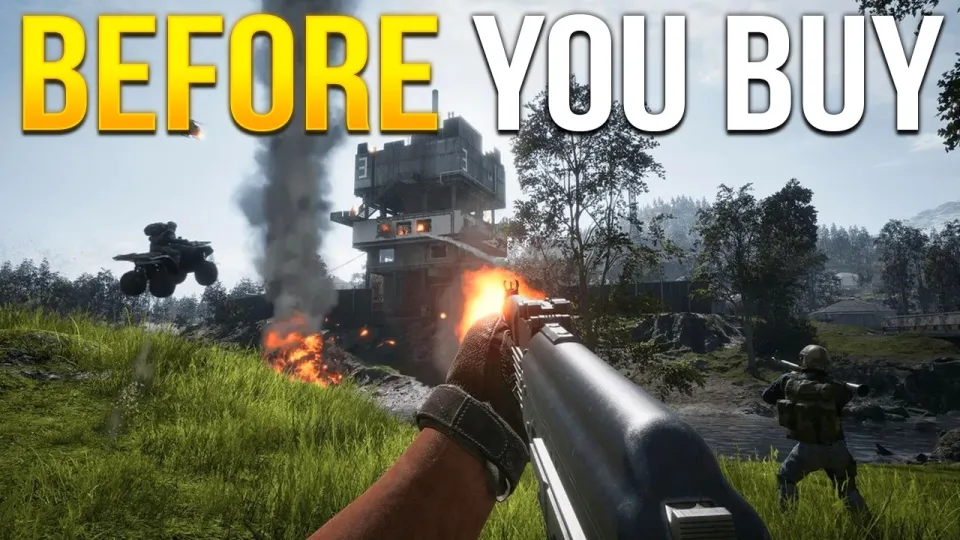
Video: Wardogs: EVERYTHING You Need to Know Before You Buy!
Want articles like this for your own video to promote it on YouTube and Google? Order them through the Telegram bot @sat_sit_bot. It writes articles around your video, embeds the video and publishes them on popular niche websites (no ads). Free trial — 50 articles.
· based on the channel Fallout Plays
Wardogs is a large-scale first-person war shooter that sits between Battlefield and Arma: faster and more arcade than Arma, slower and more logistical than Battlefield, with a Battlefield-style HUD, an in-match money system and traditional server browsers instead of automated matchmaking. If you want a shooter where positioning, transport and squad coordination matter more than twitch aim, Wardogs is the better buy; if you want instant balanced lobbies and constant action, Battlefield still wins. You can join the creator's community through the Fallout Plays subscriber link before deciding.
What Wardogs actually is and how it differs from Battlefield and Arma
Wardogs is a first-person combined-arms shooter where the match is not the whole game — the server is. Instead of being dropped into a fresh, symmetrical lobby every round, you pick a server, join a persistent-feeling battle and stay as long as you like. That single design choice changes everything downstream: team balance is looser, the same players stick around, and territory and momentum matter more than a scoreboard reset.
Three layers define the experience:
- Movement and lethality. Combat is slower than Battlefield. You cannot slide-cancel your way out of a bad push; you die because you crossed an open field without smoke or a vehicle.
- Economy. An in-match money system gates what you can bring: vehicles, equipment and role-specific gear cost currency you earn by playing the objective, not just by killing.
- HUD and information. The interface reads like a modern Battlefield title — clear objective markers, squad icons, a spawn map — which is what makes the slower pace digestible for players coming from arcade shooters.
The closest single comparison is a middle ground between Arma's simulation and Battlefield's accessibility: an arcade version of Arma, with a Battlefield HUD and a money system layered on top. Players coming from Hell Let Loose will recognise the deliberate approach to movement and cover, but Wardogs is less punishing on respawn timers and less fussy about historical authenticity.
Server browsers are the point, not a legacy feature
The most consequential thing about Wardogs is that it brings back the server browser as the primary way to find a game. You browse a list, sort by ping and player count, and pick a community. There is no hidden skill-based matchmaking quietly reshuffling teams between rounds.
What that gives you:
- Recognisable regulars. You end up fighting alongside and against the same names, which is how rivalries and clans form.
- Admin moderation. Bad actors get removed by server owners rather than by an automated report queue.
- Map and mode variety. Communities tend to run rotations that suit their player base instead of a global playlist.
The trade-off is real: a server browser means you sometimes join a losing side, a half-empty server or a fight that is already decided. If you are the kind of player who needs a guaranteed even match every single round, this is the biggest reason to hesitate.
How the money system and role economy work in practice
Wardogs pays you for contribution, not just for kills, and that currency decides what you can spawn with. In practical terms, a new player should treat the economy as a progression of responsibility rather than a shopping list.
- Start cheap. Basic infantry kits cost little or nothing, so a bad round never locks you out of playing.
- Invest in transport early. Vehicles are the single biggest force multiplier on a large map and are often under-requested.
- Earn through objectives. Capturing, defending, resupplying and transporting generate income that pure kill-hunting does not.
- Bank for the push. Saving currency for a coordinated vehicle or emplacement push is often worth more than spending it piecemeal.
Because the economy rewards objective play, the players who top the income table are frequently not the players who top the kill table. That is a deliberate design statement about what Wardogs considers valuable.
Solo play, teamwork and what to expect from public servers
Solo play in Wardogs is viable, but it is a different game. Alone, you are a flanker, a driver, a builder or a spotter — someone who supports a push rather than leads it. The most common solo experience reported by early players is that driving and logistics are surprisingly calm and genuinely enjoyable: long routes, tense deliveries, the occasional ambush.
On populated public servers, cooperation tends to appear organically because the game makes it necessary. You cannot cross a large map quickly without a ride, and you cannot hold a point without supplies. Players describe servers where squads actually talk and where a random group will wait for a transport to fill up — a level of spontaneous teamwork that is rare in automated-matchmaking shooters.
If your idea of a good evening is hanging out with people, running supplies and fighting in bursts, Wardogs suits you. If you need nonstop firefights from the first second, expect downtime.
Controls, performance and the practical buying checklist
Wardogs handles input switching unusually well, which matters for players who fly or drive with a pad and shoot with a mouse. You can move between controller and keyboard-and-mouse mid-session without the game losing your bindings, and push-to-talk keys on the keyboard do not interfere with controller input — a small detail that decides whether mixed setups are usable.
Before you buy, run through this checklist:
- Check your region's server population. A server browser game lives or dies on local communities; an empty region means an empty game.
- Decide your role. Vehicle players and support players get more out of large maps than pure infantry duelists.
- Test the pace. Wardogs is slower than Battlefield by design; if that sounds boring rather than tactical, save your money.
- Confirm your input setup. Mixed controller and mouse play works, but you should still verify your own bindings and push-to-talk key.
- Expect rough edges. A newly launched large-scale shooter has balance swings and server quirks; patience is part of the purchase.
The game has drawn a visible crowd of PlanetSide and Battlefield veterans, and their enthusiasm is a useful signal: this is the kind of shooter that a specific, underserved audience has been waiting for, not a universal crowd-pleaser.
Common doubts from players considering Wardogs
The recurring hesitation around Wardogs is not about quality but about fit. Players who loved PlanetSide ask whether the scale holds up; Battlefield players ask whether the slower pace feels like downtime; Arma players ask whether it is too arcade. The honest answer to all three is that Wardogs deliberately occupies the middle and therefore frustrates the extremes.
The second common doubt is about fairness: without automated matchmaking, will teams be lopsided? In practice, server admins and community norms do more balancing work than an algorithm, and the result is messier but more human. The third is about longevity — whether the population holds after launch month. That depends entirely on server owners and regional communities, so check live player counts for your area rather than trusting a launch-week peak.
Video sources and further watching
The Fallout Plays breakdown of Wardogs is the reference point for much of the pre-purchase discussion, and the channel's links are collected here for convenience:
- https://goo.gl/pSrt3D — Fallout Plays subscriber link
- https://patreon.com/falloutplays — Patreon support page
- https://amzn.to/2QtbiAT — Sure SM7B microphone
- https://amzn.to/3lC6epa — Blue boom arm
- https://amzn.to/393ES6m — Elgato Key Light
Verdict on whether Wardogs is worth buying
Wardogs is worth buying if you want a slower, team-driven large-scale shooter with server communities, a working in-match economy and genuinely useful vehicles; it is not worth buying if you want instant balanced matches and nonstop close-quarters action. Its strongest ideas — the server browser, the money system and the emphasis on transport and logistics — are exactly the things that make it divisive. The mixed controller and mouse support and the calm-but-tense driving role lower the barrier for newcomers more than the marketing suggests. For a full walkthrough of the mechanics before you spend money, watch the Fallout Plays video breakdown, and use the Fallout Plays subscriber link to follow along with the community.
Key takeaways
- Wardogs is a large-scale first-person war shooter built around server browsers rather than automated matchmaking.
- It layers a Battlefield-style HUD and an in-match money system over slower, more deliberate movement.
- Solo play is viable but the game rewards genuine squad coordination on populated servers.
- Controller and keyboard-and-mouse can be swapped mid-session without breaking inputs.
- Driving and flying are the most accessible roles for new players and the least punishing on aim.
Source: Wardogs: EVERYTHING You Need to Know Before You Buy! · Markdown version
Questions & answers
Is Wardogs more like Battlefield or more like Arma?
It sits between them. Wardogs uses a readable Battlefield-style HUD and objective flow, but movement, lethality and transport logistics are closer to Arma's deliberate pace. Most players describe it as an arcade version of Arma rather than a Battlefield clone.
Can you play Wardogs solo without a squad?
Yes. Solo players work best as drivers, flankers, builders or suppliers rather than as frontline assault. Because the economy rewards objective contribution, a solo logistics run can be more valuable to the team than a handful of kills.
Does Wardogs have skill-based matchmaking?
No. It uses traditional server browsers, so you choose a community and its player pool rather than being placed in an algorithmically balanced lobby. That produces more consistent regulars and admin moderation, but teams can be uneven.
Does Wardogs support controllers on PC?
Yes, and switching between a controller and keyboard-and-mouse mid-session works without losing bindings. Keyboard push-to-talk keys also do not interfere with controller input, which makes mixed setups practical for flying and driving.